Introduction to DIY Eco-Friendly Home Products
Embracing a more sustainable lifestyle often begins in the comfort of one’s own home. DIY eco-friendly home products play a pivotal role in reducing waste and conserving the environment.
The core of crafting such items revolves around natural ingredients, which not only minimise negative environmental impacts but also promote safer, chemical-free living spaces.
Individuals who engage in these DIY activities often find joy in the creativity that comes with producing their own eco-friendly solutions. They also enjoy the peace of mind that arises from knowing exactly what goes into the products they use daily.
Below is a glimpse of what one might discover when delving into the world of eco-friendly DIY:
- Natural Ingredients: Common, non-toxic elements like vinegar, baking soda, and essential oils.
- Reduce Waste: By creating reusable items, one diminishes the reliance on single-use plastics.
- Sustainability: Opting for ingredients with lower carbon footprints contributes to a more sustainable household.
Through these endeavours, not only does one contribute positively to the health of the planet, but they also cultivate a mindful and intentional approach to consumption. The journey towards a more eco-conscious lifestyle is enriching and full of possibilities when one adopts the practice of making DIY eco-friendly home products.
Reducing Plastic and Waste
Making simple changes in the household to reduce reliance on plastic can have a positive impact on the environment. By creating home products that are both eco-friendly and sustainable, one can significantly cut down on single-use plastics and contribute to a zero-waste lifestyle.
Homemade Natural Cleaning Products
One can mix basic ingredients such as vinegar, baking soda, and lemon to create effective cleaning solutions. These natural products not only cut down the need for plastic containers but also reduce the presence of harsh chemicals in the home.
For example, a homemade glass cleaner can be made using distilled water, white vinegar, and essential oils. Then, store it in a reusable spray bottle.
DIY Beeswax Wraps
Beeswax wraps are an excellent substitute for cling film and plastic sandwich bags, allowing for a sustainable way to store food.
Melting beeswax onto cotton fabric enables one to create a sealable cover that can be washed and reused many times. These wraps can be customised in various sizes, meeting the needs of different households.
Reusable Sandwich Bags
Switching from disposable plastic bags to reusable sandwich bags made of fabrics like silicone or cotton is a practical step towards a waste-free kitchen.
These bags can be used multiple times and are often dishwasher-safe, which makes them convenient for everyday use. Adopting reusable sandwich bags is not only beneficial for the environment but also cost-effective in the long run.
Upcycling for Sustainability
Upcycling, the process of converting old or discarded materials into something useful and beautiful, is a cornerstone of sustainable living. This creative practice not only reduces waste but also gives a second life to items that might otherwise end up in landfill.
Furniture Upcycling Ideas
Transforming pre-loved furniture into unique pieces is a rewarding DIY project. You can find a variety of vintage furniture awaiting a new lease of life at charity shops or car boot sales. Here are some inventive ways to upcycle:
- Chairs: Sand down wooden chairs and repaint them in vibrant colours to brighten up any room.
- Tables: Attach patterned tiles to the surface of an old table for an eye-catching mosaic effect.
- Chest of drawers: Use decoupage with old maps or book pages to give a unique, textured finish.
Individuals can create eco-friendly accessories for the home, like drawer pulls made from repurposed items such as old cutlery or colourful stones.
Sweater Pillows
Creating sweater pillows is a cosy and simple upcycling project. One can follow these steps:
- Choose a sweater no longer in use.
- Cut it to size, leaving enough fabric to sew the edges.
- Stitch three sides with strong thread, and stuff the sweater with a pillow filling.
- Sew the final side, and enjoy a new, homely accessory.
These DIY sweater pillows offer both comfort and style while contributing to the sustainability of the home. They also provide an opportunity to cherish memories associated with the sweater.
Energy Efficiency at Home

In today’s eco-conscious world, energy efficiency at home not only helps the planet but can also lead to significant savings on utility bills. This section explores various initiatives that one can undertake, from harnessing solar energy to improving heat retention.
Solar Panel Projects
Solar panels can drastically reduce one’s dependency on fossil fuels by converting sunlight into electricity. They can be implemented in a variety of DIY projects, such as installing solar-powered garden lights or tinkering with solar panel kits to power small appliances.
Energy-Efficient Appliances
Investing in energy-efficient appliances is a practical step towards minimising energy consumption. Look for appliances with high ratings under the EU energy label system, which suggest a lower environmental impact and can lead to savings on electricity bills.
Home Insulation Techniques
Proper insulation is pivotal for maintaining indoor temperature and reducing heating costs. Simple techniques include sealing gaps around windows and doors or fitting loft insulation, which can help prevent heat loss and improve indoor air quality.
LED Lighting Solutions
Swapping traditional light bulbs for LED bulbs is a low-cost change with a big impact. LED bulbs use significantly less energy and can last up to 10,000 hours, greatly reducing the need for replacements and energy bills.
Natural Decor and Accessories
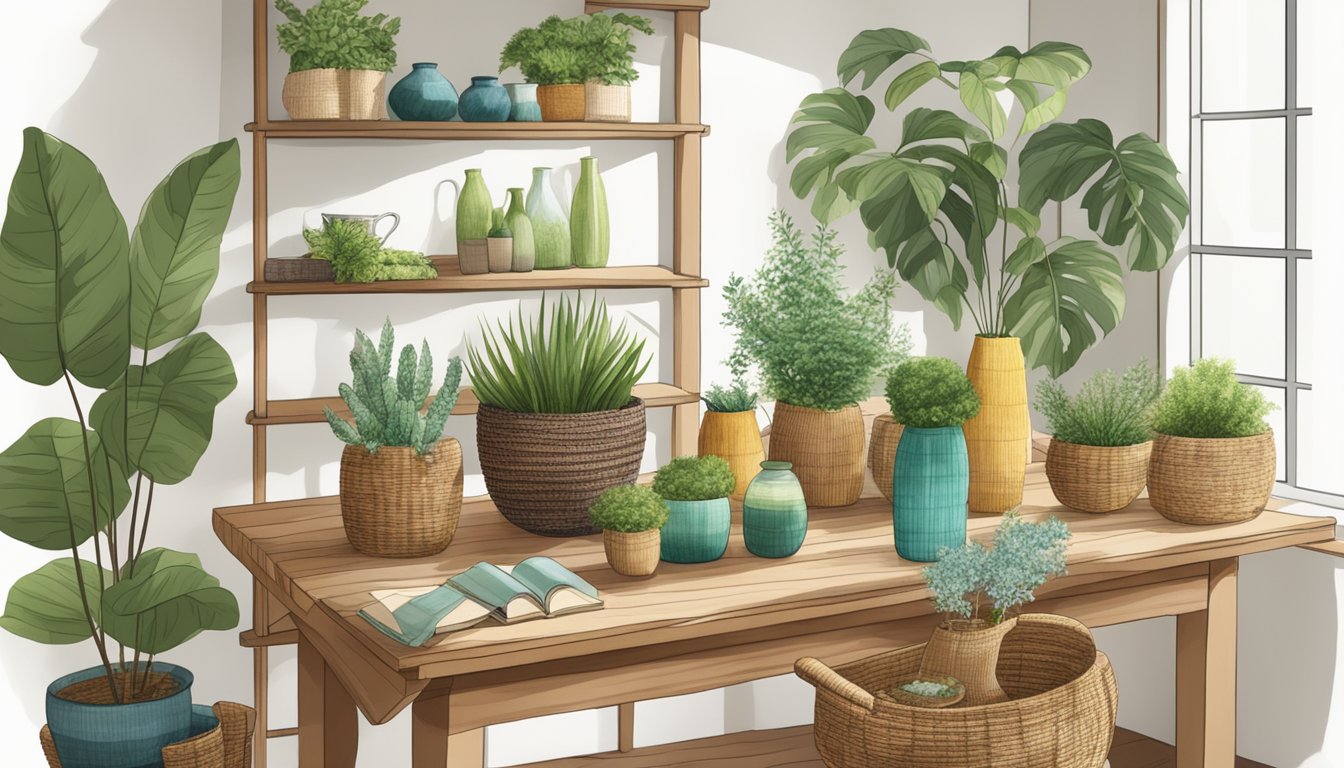
Incorporating natural elements into one’s home through DIY projects not only adds a personal touch but is also a step towards sustainability. From growing one’s own herbs to reviving objects with new purpose, these additions bring charm and functionality.
DIY Herb Garden
One can cultivate a DIY Herb Garden on their windowsill or balcony using repurposed containers. Planting herbs like basil, mint, and coriander in small pots or using a hanging organiser maximises space and provides fresh seasoning at arm’s reach. Bamboo can serve as a natural and sturdy material for creating plant markers or supporting structures.
Upcycled Decorations
Turning old materials into Upcycled Decorations offers a creative way to reduce waste. Glass jars can transform into charming vases, while reclaimed wood can be used to craft rustic photo frames or shelving. Even old light fixtures can become unique planters, adding an unexpected twist to home lighting accessories.
Handmade Candles
Creating Handmade Candles using soy or beeswax is a delightful way to customise home scents while avoiding the chemicals often found in store-bought versions. Adding natural elements like lavender or cinnamon sticks to the wax not only imbues the candles with inviting aromas but also makes them visually intriguing accessories.
Improving Indoor Air Quality
In the quest for a healthier home, improving indoor air quality is crucial. Homes often harbour a variety of toxic chemicals and volatile organic compounds (VOCs) that can emanate from common household items such as paints or cleaning products.
Fortunately, there are several eco-friendly DIY ideas one can utilise to enhance the air one breathes indoors.
Firstly, consider introducing an air purifier into the home. These devices can significantly reduce the presence of allergens, dust, and other pollutants.
For those seeking a natural option, certain plants are renowned for their air-purifying abilities. Spider plants, for instance, are celebrated for filtering out common indoor pollutants.
Next, it’s important to address the sources of VOCs. Opting for non-toxic paints and finishes when decorating limits the release of harmful gases.
You can also take practical steps like regularly ventilating rooms by opening windows to encourage fresh air circulation. Additionally, use baking soda as a natural deodoriser to absorb unpleasant odours.
Finally, make eco-friendly cleaning solutions with ingredients like vinegar and lemon juice to minimise the use of synthetic chemicals.
Waste Reduction Strategies
Embracing waste reduction strategies at home is not only environmentally friendly but can be quite fulfilling. By implementing methods like composting and collecting rainwater, individuals can significantly lower their waste footprint and embrace a more sustainable lifestyle.
Composting at Home
Composting is an excellent way for individuals to reduce their household waste. By setting up a compost bin in the garden, one can convert organic waste into nutrient-rich compost.
This homemade compost can then be used to enrich garden soil, leading to robust plant growth without the need for chemical fertilisers.
- Benefits:
- Reduces the volume of waste sent to landfill
- Produces a free, nutrient-dense soil additive
- Tips:
- Balance green and brown materials to fast-track decomposition.
- Regularly turn the compost to aerate it.
Using Rain Barrels
Installing a rain barrel is another tactical method to reduce one’s ecological impact.
Collecting rainwater mitigates the need for tap water for gardening purposes. It’s a simple yet effective system that can be coupled with the use of compost to promote an organic and sustainable garden.
- Uses:
- Watering plants and lawns
- Cleaning outdoor areas
- Considerations:
- Make sure the barrel has a secure lid to prevent mosquitoes.
- Position the barrel under a downspout for optimal water collection.
By integrating these two methods, one can eliminate the use of toxic dryer sheets and reduce water consumption, further enhancing their home’s green credentials.
Renewable Resource Use

Utilising renewable resources is a cornerstone of sustainable living.
Products made from materials like bamboo exemplify this, as they are not only sustainable but also versatile.
Bamboo grows quickly and requires no fertilisers or pesticides, making it a highly eco-friendly option.
- Cork: Harvested from cork oak trees without harming them, cork is a renewable resource with insulation and soundproofing qualities. It’s ideal for flooring and notice boards.
- Bamboo: This fast-growing grass can be used for furniture, flooring, and an array of household items. It’s strength and rapid regeneration make it a staple in eco-friendly products.
| Material | Uses | Benefits |
|---|---|---|
| Cork | Flooring, Notice boards | Eco-friendly, Insulating |
| Bamboo | Furniture, Utensils, Cups | Sustainable, Durable, Versatile |
Textiles like bamboo fabric are gentle on the skin and the environment, as bamboo does not require large amounts of water or pesticides to thrive.
It lends itself to a range of products, such as clothing, bedding, and bath towels, all promoting sustainability.
Eco-Friendly Practices for Everyday Living

Adopting eco-friendly practices into one’s daily routine is a step towards a sustainable future.
Individuals can embrace DIY projects which not only add a personal touch to their homes but also contribute to environmental conservation. Here are some simple yet effective ideas to get started:
- Plastic-Free Choices: One can start by reducing plastic waste with reusable bags and containers for shopping and storage.Creating cloth bags from old t-shirts or fabrics is a fun activity that diminishes reliance on single-use plastics.
- Homemade Cleaning Solutions: Opt for homemade cleaning agents using ingredients like vinegar, baking soda, and lemon juice.This helps to cut down on harmful chemicals and single-use plastic bottles.For a comprehensive list of products, one might want to explore a guide on eco-friendly and biodegradable household items.
- Upcycling Furniture: Giving old furniture a new lease of life with a creative makeover can be both innovative and environmentally friendly.It’s a productive way to avoid waste and contribute to a circular economy.
Energy Conservation:
- LED Lighting: Switching to LED bulbs saves energy and money.
- Air-drying Clothes: Using a drying rack or line instead of a tumble dryer saves electricity.
For those ready to make more significant changes, there are sustainable home improvement techniques that can be employed.
An individual can seal drafts, install better insulation, and use eco-friendly paint.
The key is to make adjustments that complement one’s lifestyle while fostering sustainability.
Frequently Asked Questions

In this section, one will find an assortment of common inquiries about crafting eco-friendly products at home. It includes practical ideas for green living that can be implemented by adults, children, and students alike.
How can I create eco-friendly cleaning products using everyday household items?
One can make eco-friendly cleaning products from items like vinegar, baking soda, and essential oils.
These natural ingredients are not only effective but also safer for the environment.
Which eco-friendly crafts are suitable for adults and can be easily made at home?
Adults can engage in eco-friendly crafts like creating beeswax wraps or upcycling glass jars into planters and candle holders.
These projects are simple yet impactful ways to reduce waste.
What are some sustainable DIY craft ideas that I can do with children?
Engaging in DIY projects such as making seed paper or biodegradable plant pots with children can be a fun and enlightening experience, teaching them valuable lessons about sustainability.
Could you suggest some eco-friendly project ideas that would be ideal for students?
Students can explore making reusable fabric tote bags or starting a small compost bin for their organic waste.
These projects can cultivate a deeper understanding of responsible consumption.
In what ways can I make my home more environmentally friendly with self-made products?
Improving one’s home can be as simple as fabricating draught excluders from old clothing or using homemade natural cleaners.
These solutions reduce one’s ecological footprint in practical and cost-effective ways.
What types of eco-friendly goods can I craft at home with the intent to sell?
Crafting goods like hand-poured soy candles or handcrafted soap can be a viable eco-friendly business venture. You can use natural materials to offer sustainable products that appeal to environmentally conscious consumers.